
Fort Wildlife Refuge is one of many protected properties managed by the Audubon Society of Rhode Island (ASRI). Encompassing 235 acres, the refuge opened to the public in 1996 and is formally known as the Florence Sutherland Fort & Richard Knight Fort Wildlife Refuge, honoring the donors who helped preserve this land for wildlife and public enjoyment.
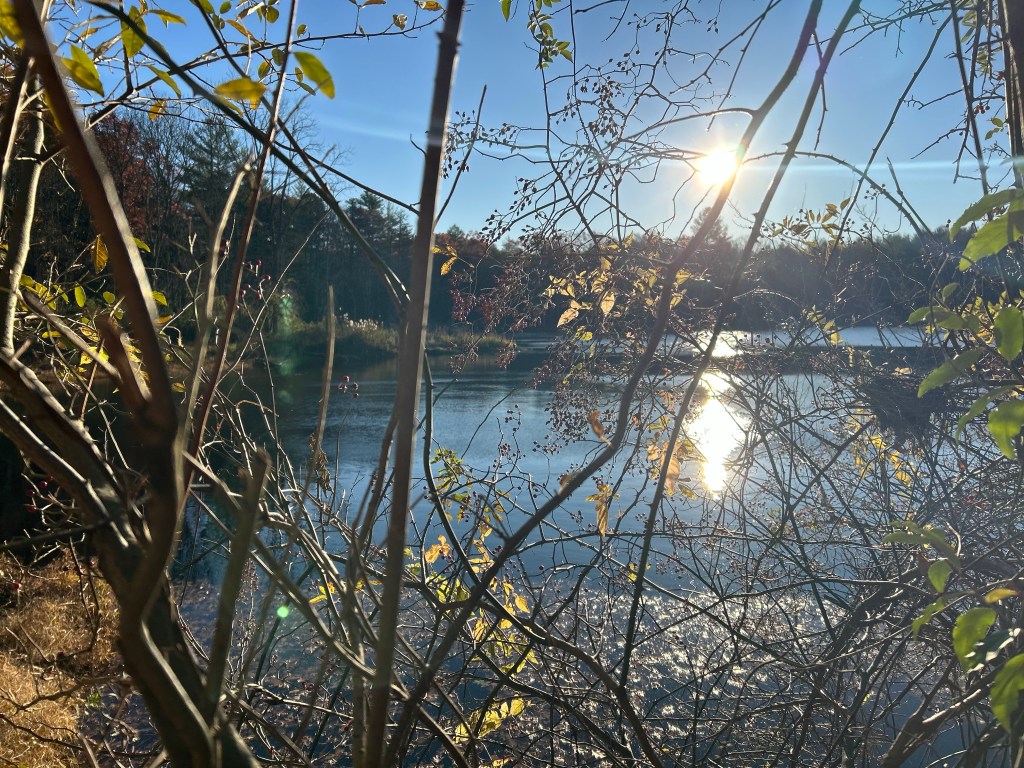
Just when we think we’ve explored every trail Rhode Island has to offer, we stumble upon another hidden gem. That was exactly the case with Fort Wildlife Refuge. We visited in early November, when the leaves were mostly down, the air was crisp, and the woods felt open and quiet.
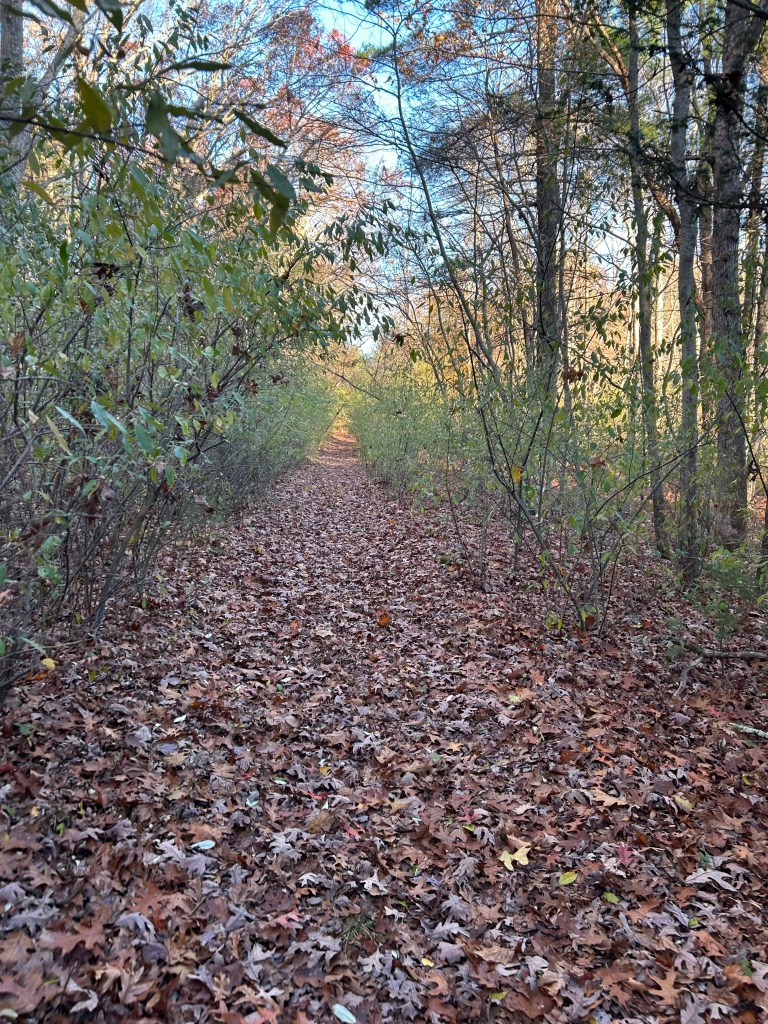
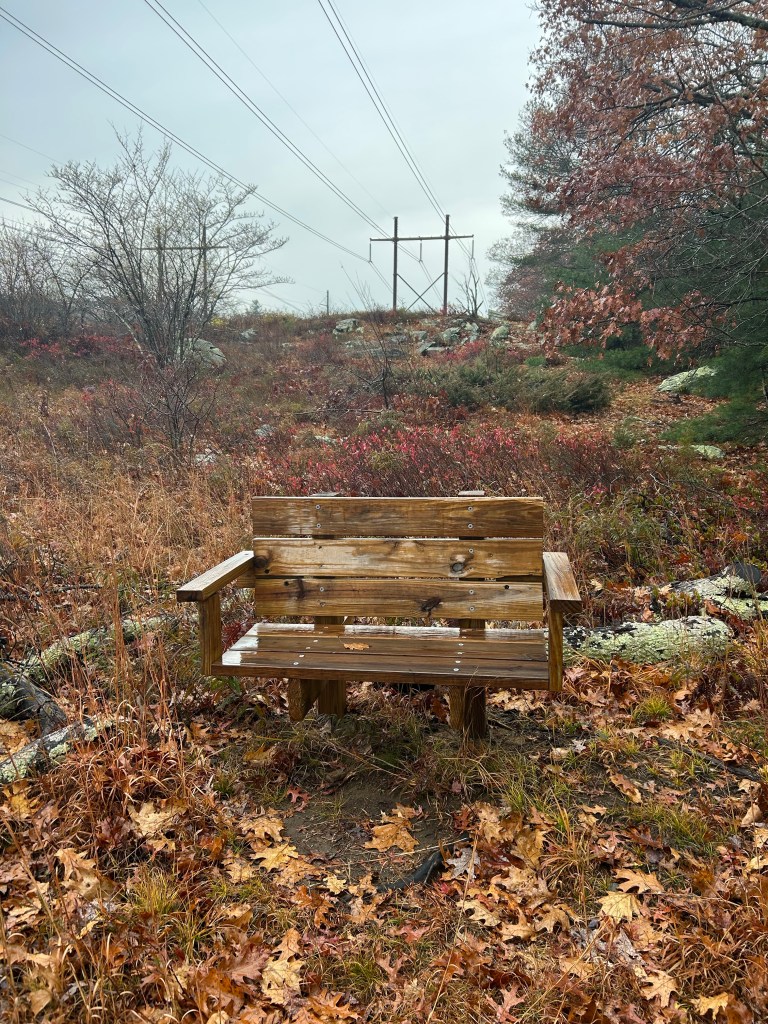
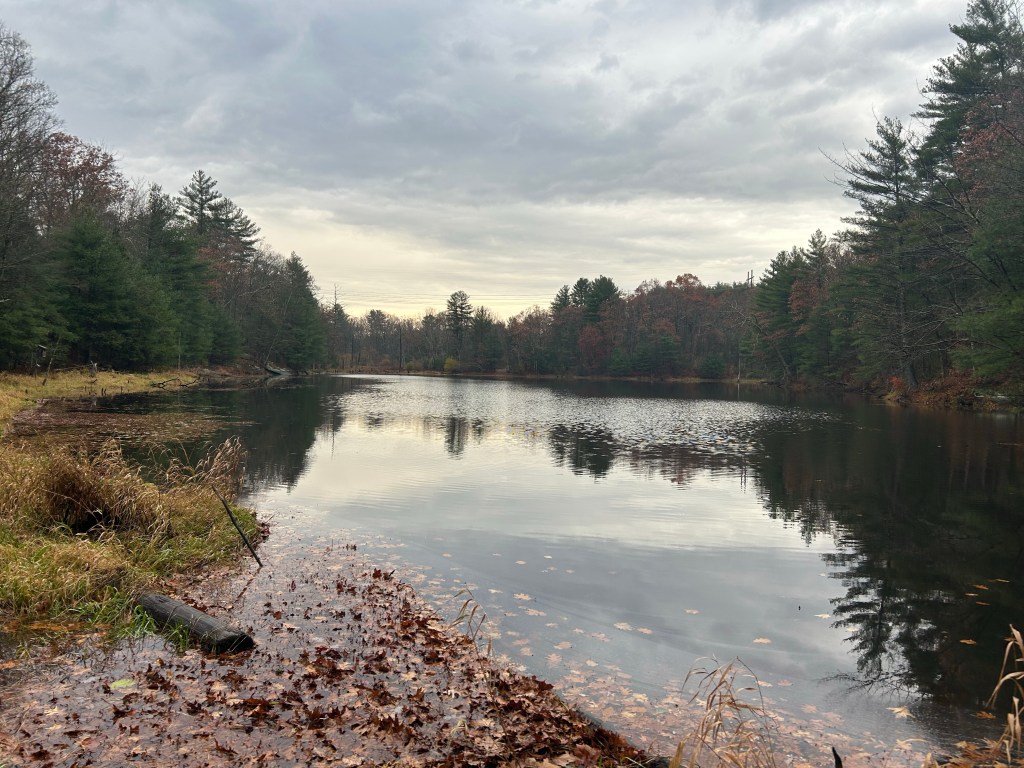
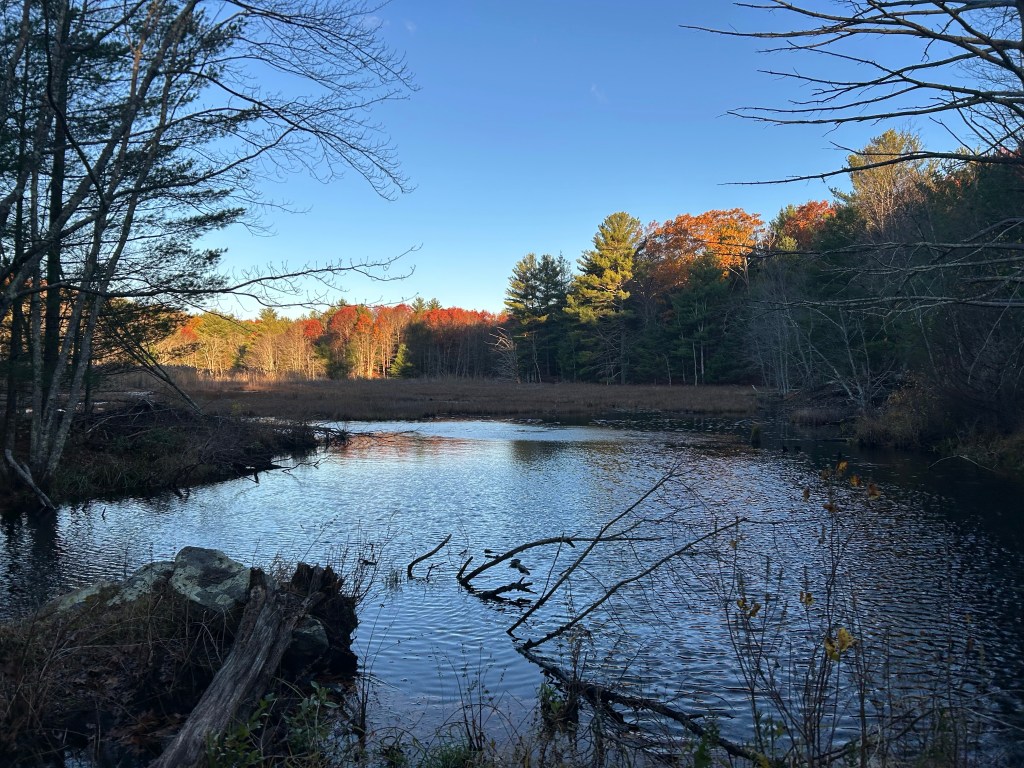
We planned a loop that connected the blue, yellow, and red trails, creating a relaxed but varied hike that showcased the character of this North Smithfield property. Along the way, we took a short spur off the main trail to visit First Pond, then later passed Second Pond as the loop carried us back through the heart of the refuge.
History of Fort Wildlife Refuge
Like many green spaces managed by ASRI or Rhode Island Department of Environmental Management (RIDEM), this land has a working past. Before becoming protected open space, portions of the property were actively farmed. Audubon trail materials point out a ground depression believed to be the remains of a root cellar, though this detail has not been definitively confirmed.
The landscape also tells a much older story. Scattered throughout the woods are large boulders known as glacial erratics, deposited thousands of years ago as retreating glaciers reshaped the region.
American Chestnut Trees
One of the most memorable moments of this November hike was spotting fallen chestnuts along the trail, still tucked inside their spiky husks. This is a rare sight today, which makes it all the more meaningful. The American chestnut was once one of the most abundant and important trees in Rhode Island and across the eastern United States, valued both as a food source for wildlife and for its rot-resistant wood.
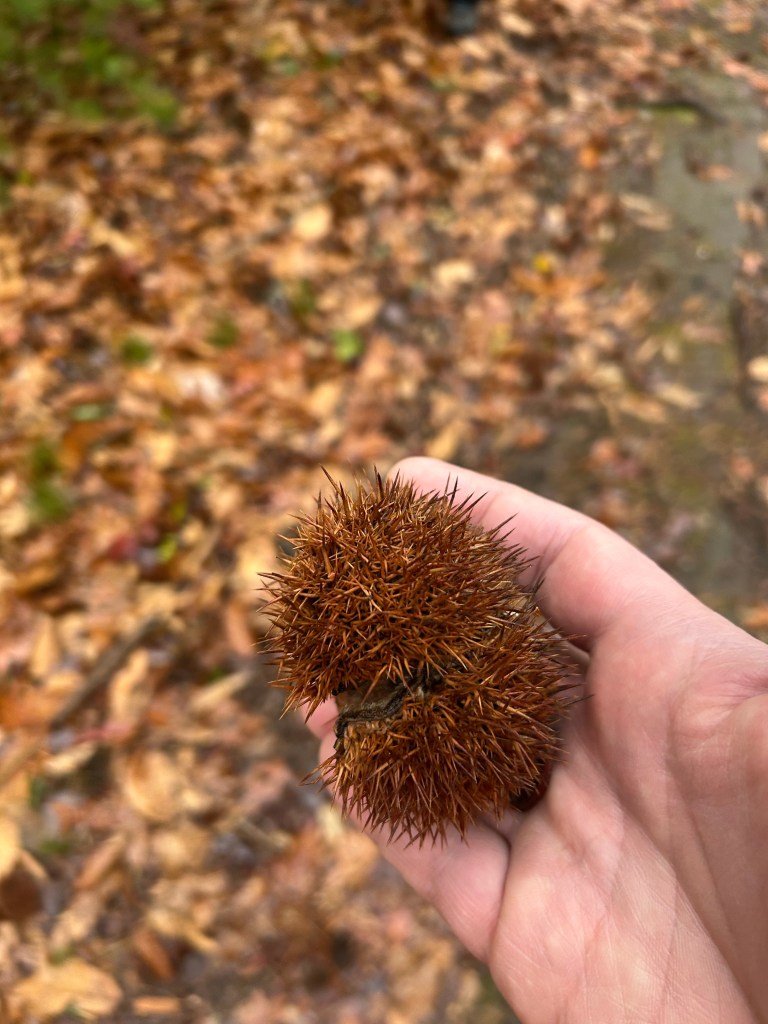
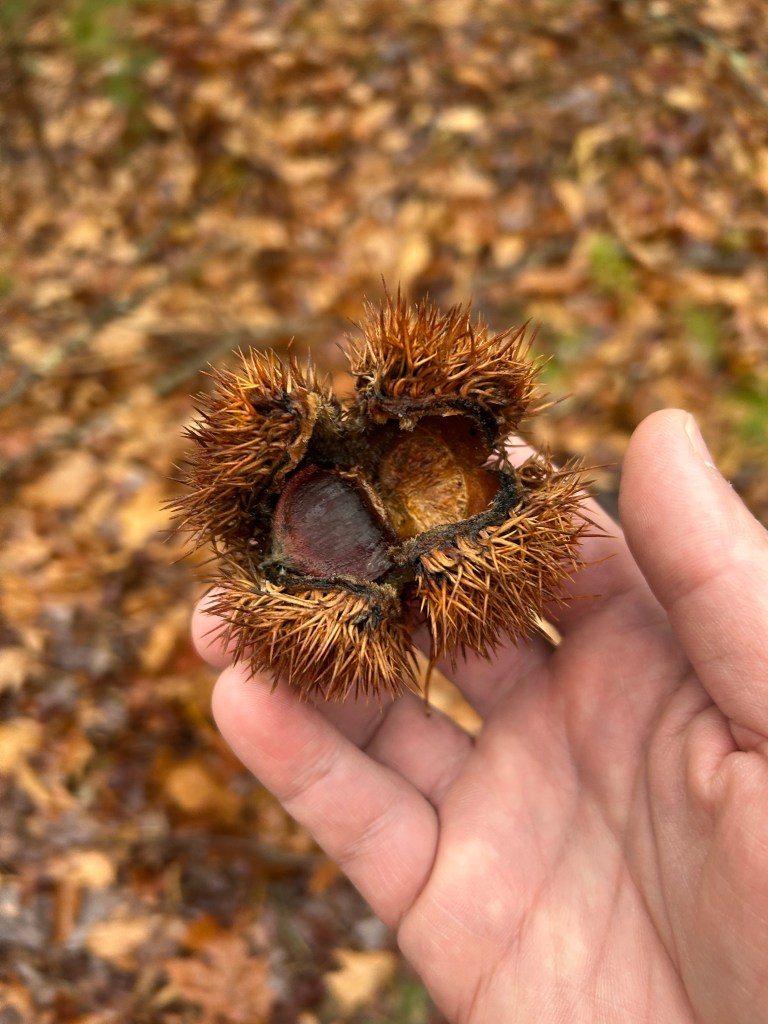
In the early 1900s, chestnut blight, a fungal disease, devastated the species—killing billions of trees and making mature American chestnuts rare today. Most surviving trees only reach sapling size before succumbing once again. ASRI notes that Fort Wildlife Refuge still supports American chestnut trees, which explains why hikers may occasionally find chestnuts on the forest floor here—a living reminder of what New England forests once looked like.
 Rhode Island Hiking
Leave a comment