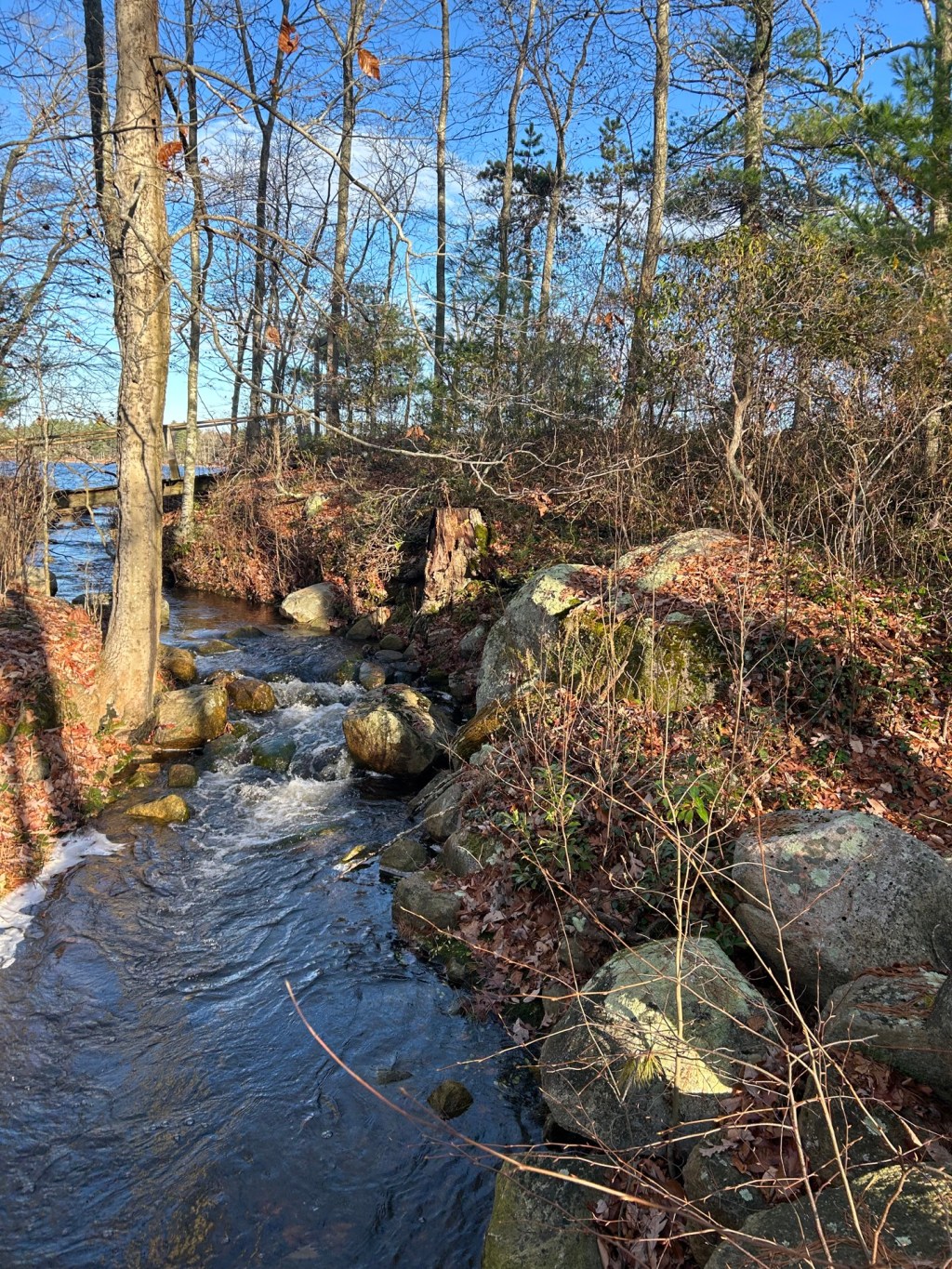
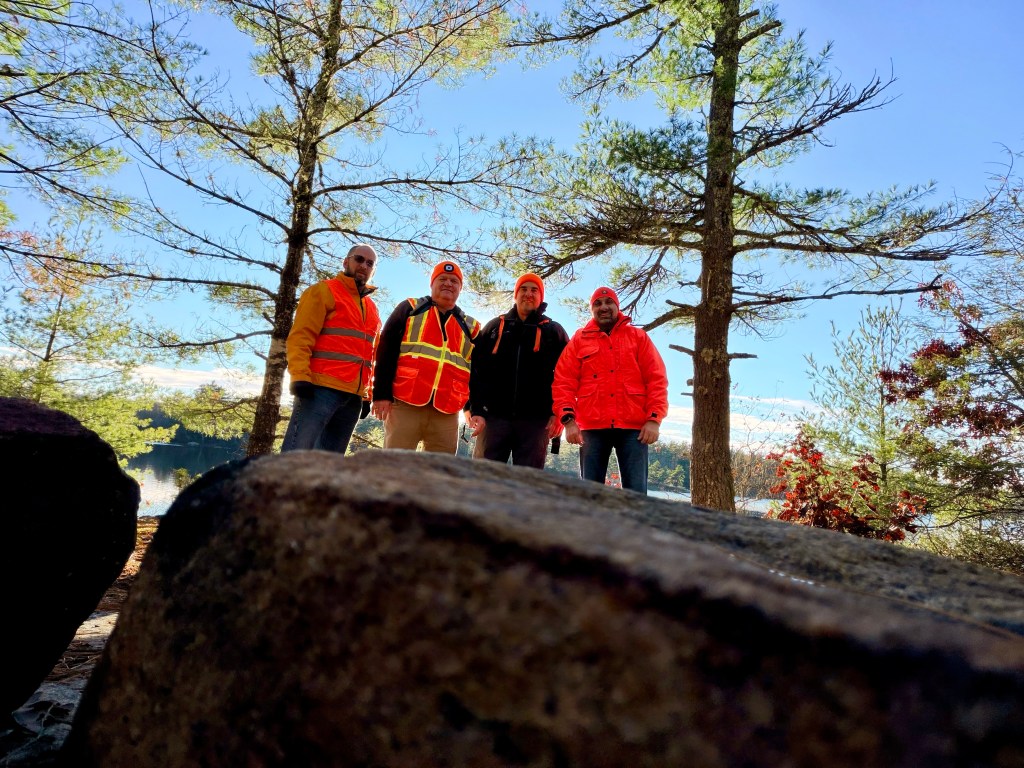
Yawgoog is 1,800 acres of mostly flat, forested Scout reservation in the southwestern corner of Rhode Island, and on Saturday we had it nearly to ourselves for a hike. The thermometer read a cool 35 degrees, but the sky was clear and the air was crisp and clean, which is about as good as November hiking gets.
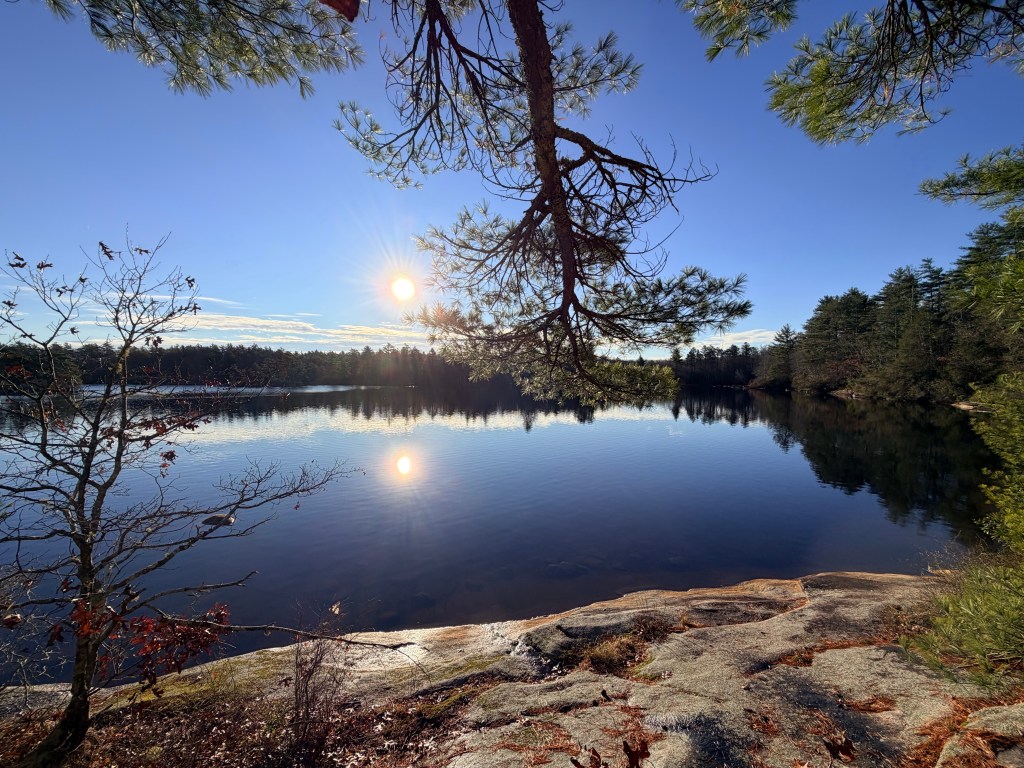
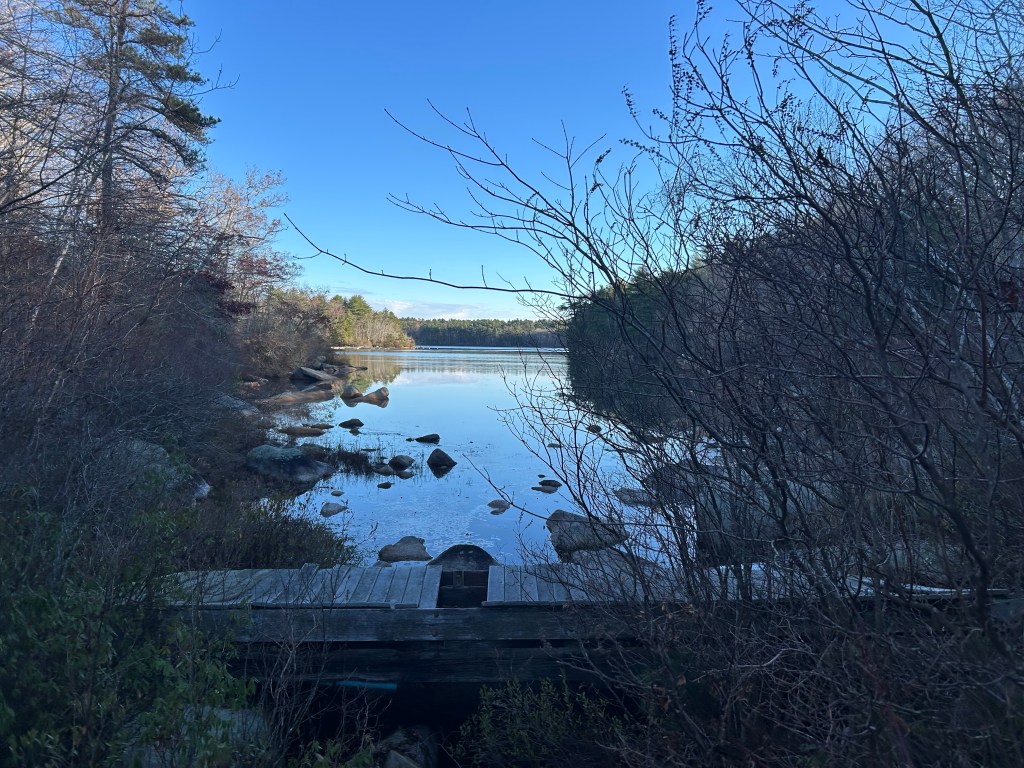
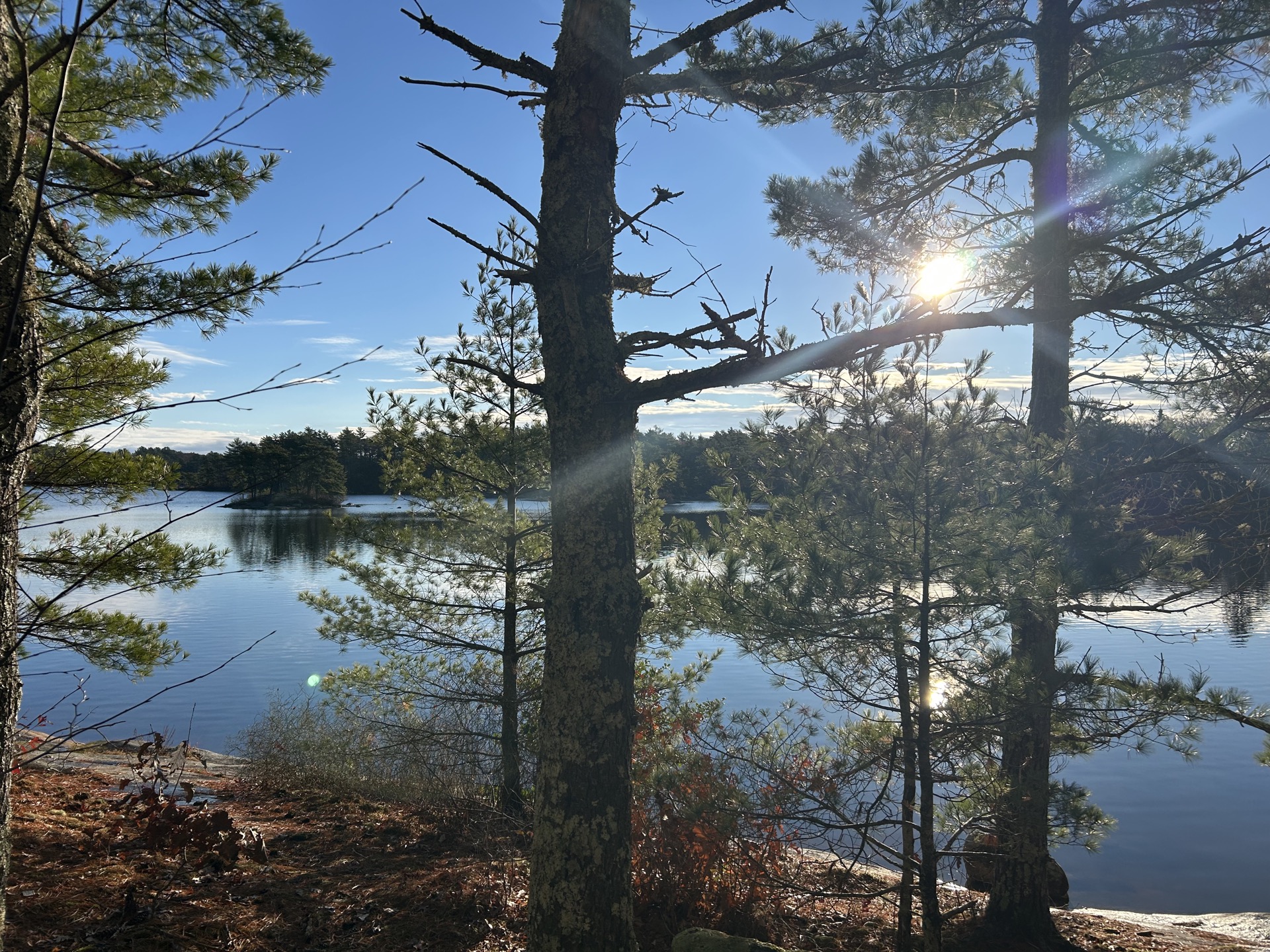
We began our loop behind the Metcalf Mess Hall, following the trail counterclockwise around Yawgoog Pond, the reservation’s main body of water and the center of waterfront activities for all three camps. The pond is dotted with several islands, including Cranberry, Submarine, Ant, and Schooner, as well as the largest of them all, King Philip’s Island.
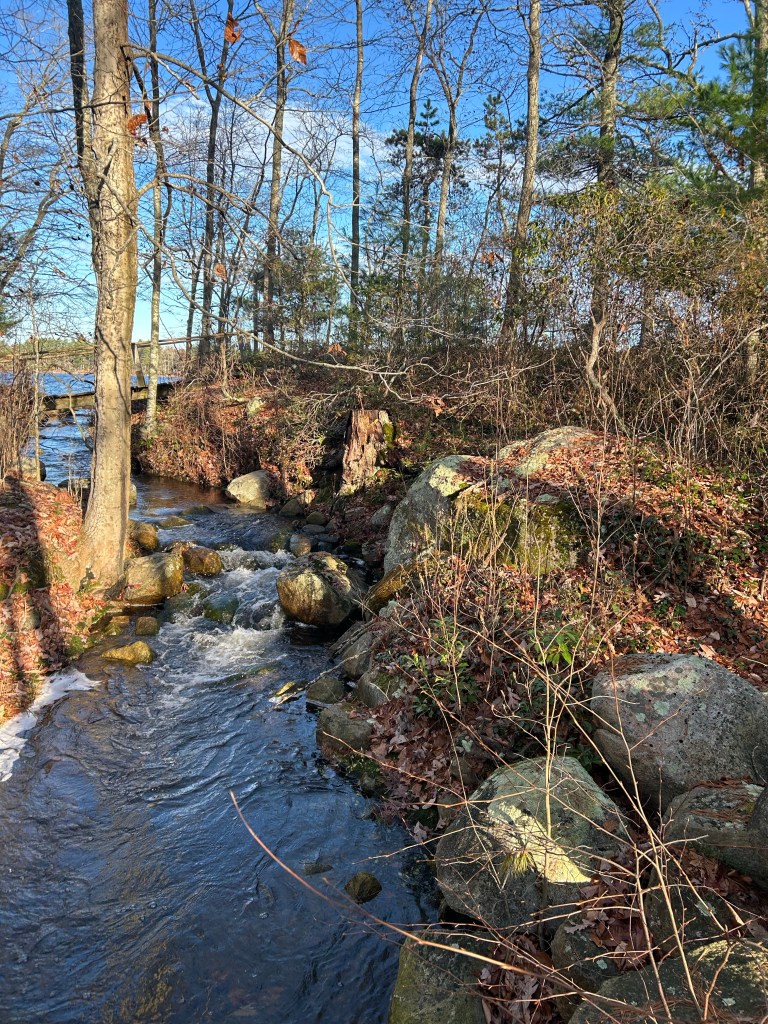
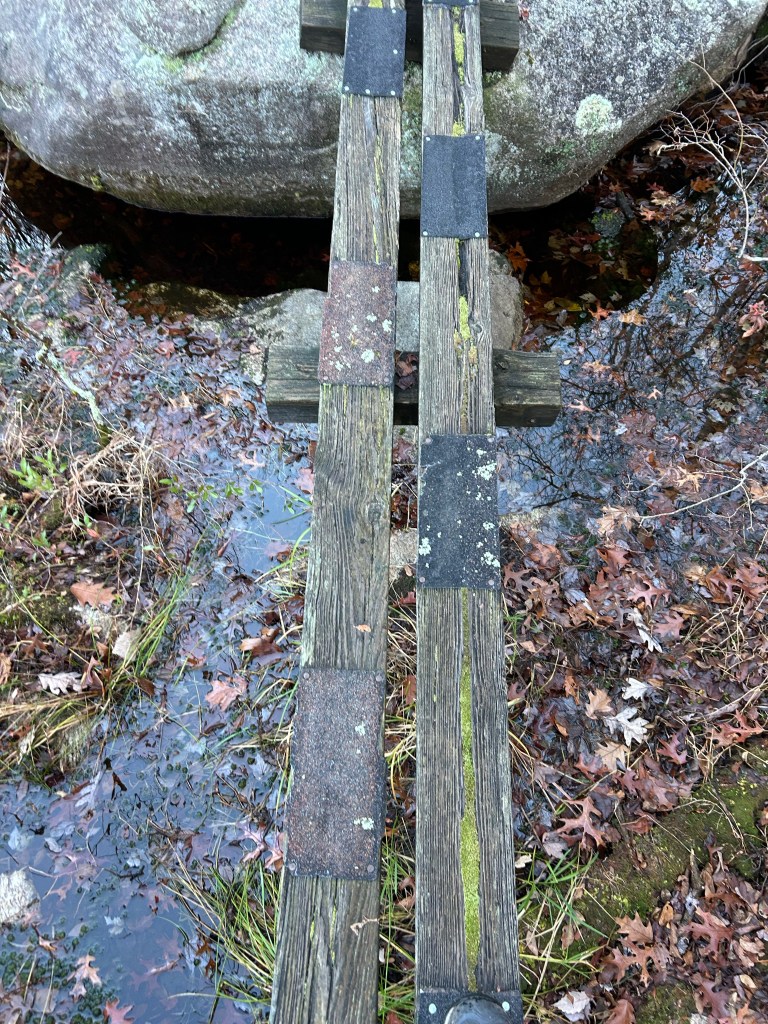
The trail offered a few unexpected surprises along the way. Several sections were covered by standing water, but we were able to navigate around the flooded areas or carefully hop across rocks to reach dry ground without difficulty. We also crossed a number of sturdy bridges constructed from railroad ties, spanning both standing water and small flowing streams.
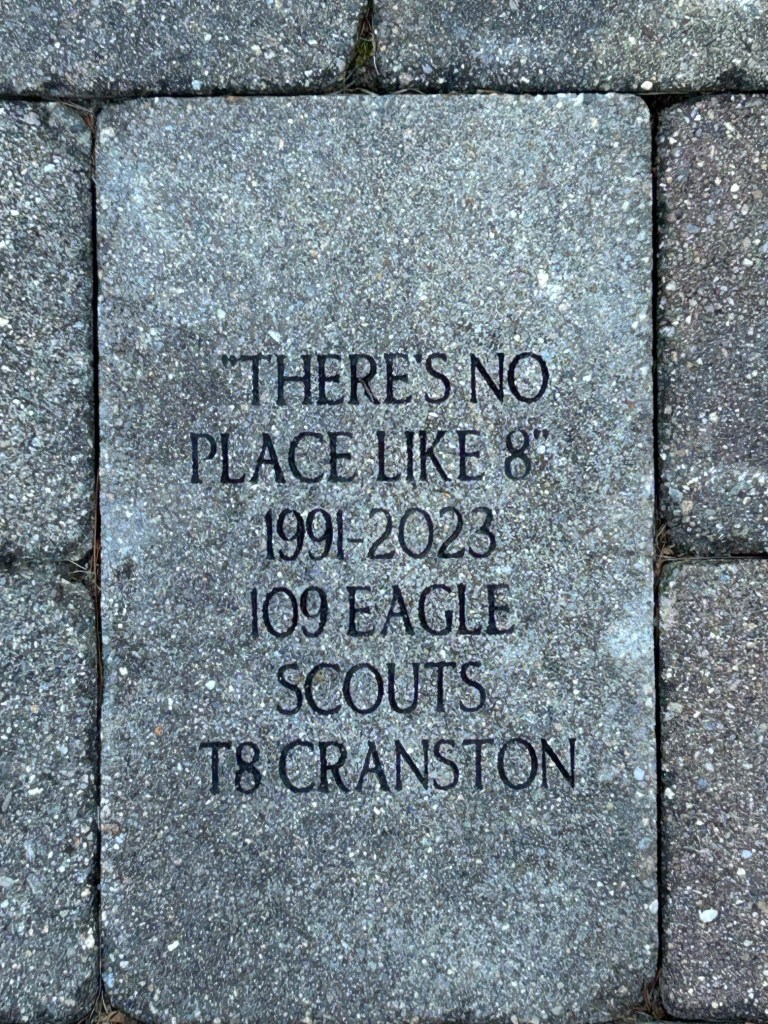
After completing our hike, we wandered over to the paved walkway near the Bucklin Building to locate the newly installed Cranston Troop 8 commemorative paver among the collection of engraved bricks. As former Scout leaders, we couldn’t resist making our way to the Neil Armstrong campsite, where we spent many summers camping with the troop.
Camp Yawgoog holds a special place in our hearts, filled with memories from those years. We each paused for a few moments to reflect on the experiences, friendships, and traditions that made those weeks so memorable.
As we walked toward the campsite, we noticed several Scout troops spending the weekend at the reservation, bringing a welcome sense of activity to the campground during the off-season. The reservation remains open for tent and cabin camping outside of its summer program, and it was encouraging to see the facilities being enjoyed and well utilized.
History
Yawgoog began in 1916, when Scout Executive Donald North looked over some twenty ponds around Rhode Island and recommended the deserted Joseph Palmer farm on Yawgoog Pond as a permanent home for Scouting. The first 150 acres were leased to the Rhode Island Boy Scouts that year and bought outright in 1917. That makes Yawgoog the fifth oldest Boy Scout camp in the United States. The first campers pitched tents together in one big camp on what is now Tim O’Neil Field. That original camp, first called Camp Bucklin, is now Camp Three Point. In 1924 the camp was split into Upper and Lower Camp, and over time it grew into the three camps of today: Three Point, Medicine Bow and Sandy Beach.
The name has a story, though maybe not a true one. Local legend says Yawgoog and Wincheck were two Narragansett chiefs, but no historical record shows any sachem with either name. The reservation grew in 1953, when the Rhode Island Boy Scouts bought a controlling interest in the Yawgo Line and Twine Company. That purchase brought the pond’s water rights, fourteen mill houses, a store and roughly 200 more acres.
The land has also been through fire. On May 4 to 6, 1930, a forest fire destroyed much of the woods, and fast-growing white pines were planted in their place. The same fire exposed Hidden Lake, and the debris from it was bulldozed into the water. The lake became so acidic that no fish or plants live in it now. Yawgoog is also credited with the first Totin’ Chip axe-safety program, created in 1950 by John Page, nicknamed “Johnny Appleseed.” And in 2020, because of the pandemic, the camp stayed closed for the first time in 104 summers.
History notes drawn from Wikipedia: Yawgoog Scout Reservation, Hopkinton, Rhode Island, Narragansett Council.


Leave a Reply